
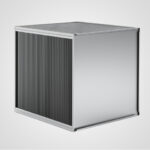

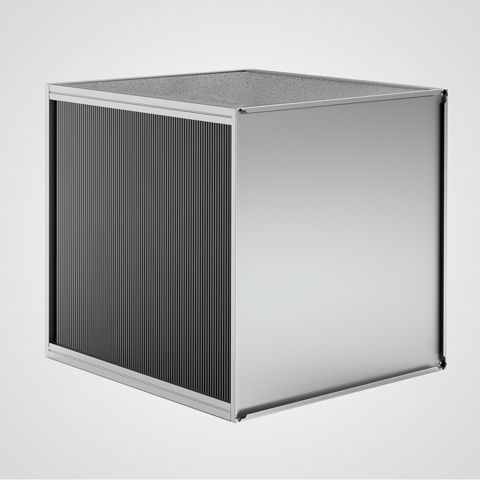
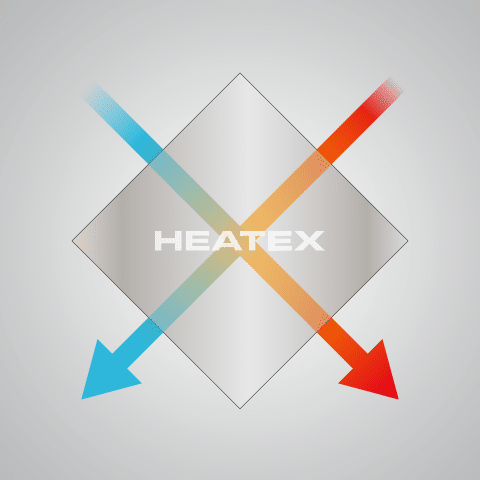
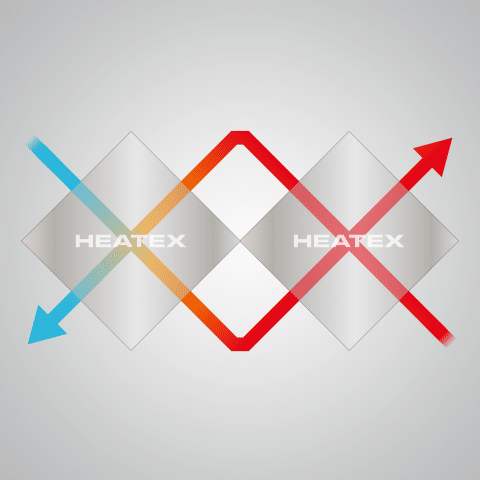
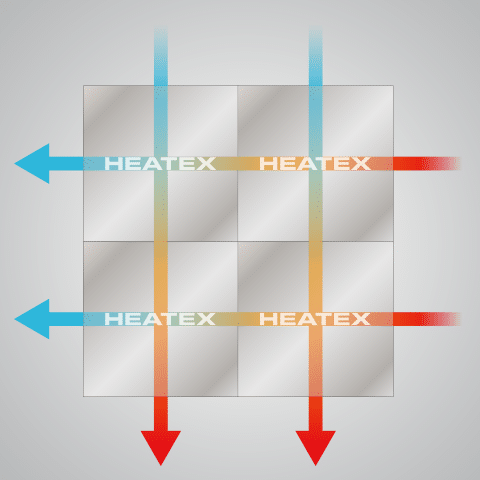

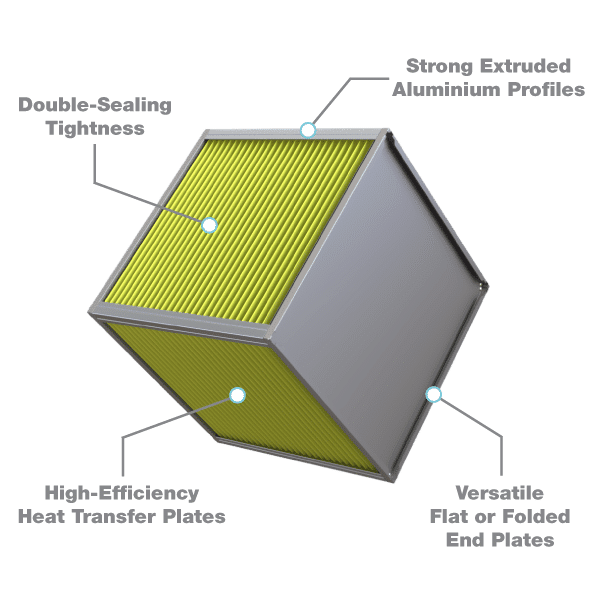
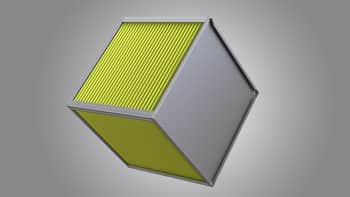







grey crossflow heat exchanger
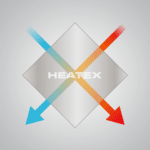
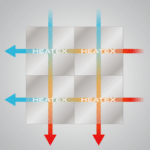
airflow illustration
grey crossflow heat exchanger
airflow illustration

Crossflow Heat Exchangers

Heatex crossflow heat exchangers are carefully designed to meet the demands of each specific application and maximize energy recovery.


High Efficiency
High Efficiency

Up to 90% of the heat in the exhaust air is transferred to the supply air.

Easy Maintenance
Easy Maintenance

The design allows for rapid and thorough cleaning and servicing.

Longevity
Longevity

No moving parts and strong heat transfer plates guarantee a long lifetime.

High Efficiency
High Efficiency

Up to 90% of the heat in the exhaust air is transferred to the supply air.

Easy Maintenance
Easy Maintenance

The design allows for rapid and thorough cleaning and servicing.

Longevity
Longevity

No moving parts and strong heat transfer plates guarantee a long lifetime.

CROSSFLOW HEAT EXCHANGER FEATURES

All Heatex crossflow heat exchangers share these features:

  • Extruded aluminum corner profiles (stainless steel is optional).
  • The double-sealing concept prevents leakage and contamination by combining gluing and a mechanical fold.
  • Heatex’s corrugation pattern increases turbulence and heat transfer without creating stagnation points.
  • End plates with flat or folded edges for all mounting interfaces.

Depending on the application, you may need a specific crossflow model, along with optional features. Please see our comparison table below.

CHOOSE YOUR CROSSFLOW HEAT EXCHANGER MODEL

Every crossflow model has a clear advantage, depending on the application.

Heatex Model H2 H P Z2 Z
Typical applications Comfort ventilation applications Process ventilation applications High-pressure applications Highly corrosive/ harsh conditions Highly corrosive/ harsh conditions
Efficiency
(relative)
Superior High High Superior High
Airflow capacity
(relative)
Standard High High Standard High
Heat transfer plate material
  • Aluminum
  • Epoxy-coated aluminium
  • Aluminum
  • Epoxy-coated aluminium
  • Aluminum
  • Epoxy-coated aluminium
Stainless steel Stainless steel
Plate size (single or multi-module) 500 – 3000 mm (19.69″ – 118.1″) 200 – 3000 mm (7.87″ – 118.1″) 600 – 3000 mm (7.87″ – 118.1″) 850 – 2550 mm (33.5″ – 100″) 600 – 2400 mm (23.62″ – 94.49″)
Max. differential pressure 3000 Pa (12.04 in. WC) 1800 Pa (7.23 in. WC) 3800 Pa (12.26 in. WC) TBD 4000 Pa (16.06 in. WC)

OPTIONS FOR CROSSFLOW HEAT EXCHANGERS

Besides being able to configure each heat exchanger in numerous ways in terms of size and performance requirements, we offer a wide range of options to suit various applications.

grey and golden plate heat exchanger
Epoxy Plates & Corrosion-Protected Framework

We recommend adding epoxy-coated heat transfer plates, a corrosion-protected framework, and lacquered plate edges to improve corrosion protection in demanding applications, such as coastal environments.

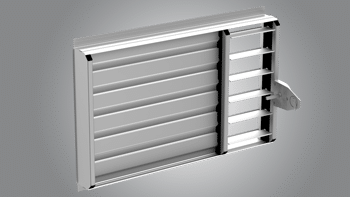
grey aluminum damper
Bypass & Dampers

Dampers are useful for protecting the heat exchanger when it approaches the freezing point. Heatex dampers are suitable for close/open bypass exchanger sections connected to a crossflow plate heat exchanger.

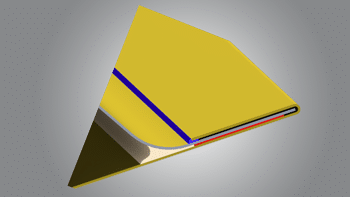
plate fold illustration
AquaSeal

Heatex offers a process for filling all plate crevices with a special polymer to achieve water-tightness and an even higher level of air-tightness. This will result in a highly tight heat exchanger suitable for high humidity or direct water exposure.

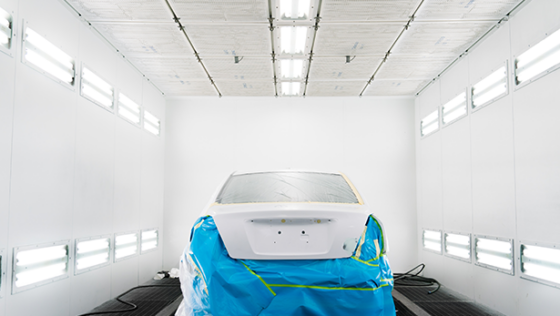
APPLICATIONS FOR CROSSFLOW HEAT EXCHANGERS

Crossflow heat exchangers are very versatile and can be found in a wide range of applications. These are just a few examples.

PRODUCT SELECTION WITH HEATEX SELECT

Heatex Select enables accurate calculations of the performance of our products under different conditions. Choose your preferred crossflow heat exchanger model and configure it according to your needs.

Calculate with Heatex Select

FAQ & DOCUMENTS ABOUT CROSSFLOW HEAT EXCHANGERS

How does a crossflow heat exchanger work?

In a crossflow heat exchanger, the cold and the warm air flow perpendicular to each other. Two neighboring aluminum plates create channels for the air to pass through. The supply air passes on one side of the plate and the exhaust air on the other. Heat in the exhaust air is transferred through the plate from the warmer to the colder air.

A very important parameter for the performance of a plate heat exchanger is the spacing between the plates. A narrow channel leads to a high pressure drop but also to high efficiency.

The latter means that more heat is transferred to the cold side. A higher plate spacing is preferable when a lower pressure drop is required. The trade-off is lower efficiency.

Usually, the exhaust air is contaminated with humidity and pollutants, but with a plate heat exchanger, airflows never mix, leaving the supply air fresh and clean.

What is the difference between a crossflow and a counterflow heat exchanger?

A crossflow heat exchanger transfers heat between two air streams that move perpendicular to each other, typically at a 90‑degree angle. This distinctive airflow pattern defines the crossflow design: the supply and exhaust air cross paths without flowing in the same direction. As a result, the construction remains compact and mechanically robust, with a naturally low pressure drop, making it ideal for ventilation units and various industrial applications.

Compared to counterflow heat exchangers—where air streams move in opposite directions along the same path—a crossflow design creates less contact time between the air streams. This results in moderate but reliable efficiency. While it does not match the high recovery levels achieved by counterflow systems, the perpendicular airflow geometry offers advantages in footprint, simplicity, and flexibility in integration.

For applications where space, pressure drop, and cost‑effective operation matter more than maximum temperature transfer, a crossflow heat exchanger offers the optimal balance.

Are Heatex plate heat exchangers IP rated?

Our Model H2 cross-flow plate heat exchanger has been successfully tested in accordance with EN 60529 and is now officially IP65-rated.

Optional tightness treatment is available for all our cross-flow heat exchangers.

An IP65 rating means complete protection against dust and low-pressure water jets from any direction, as well as condensation and water spray.

During testing, no dust or water penetrated the heat exchanger, confirming complete compliance with IP65 requirements.

The Model H2 was tested and certified by RISE – Research Institute of Sweden AB, ensuring reliability and performance for demanding environments.

How can I increase corrosion resistance?

You can enhance the corrosion resistance of your plate heat exchanger by selecting a corrosion‑protected framework in Heatex Select.

The zinc‑magnesium coating is an advanced metallic coating that delivers outstanding corrosion protection and is well-suited for demanding environments. It provides exceptional surface and edge protection, even under highly aggressive conditions in industrial and marine applications.

It meets corrosion protection class C5 according to RISE (>1440 h salt spray testing)  and has self‑healing properties to ensure excellent edge protection. It is also an environmentally friendly solution.

For even more corrosive or harsh environments, we also supply stainless steel exchangers.

DOCUMENTS
Technical Documentation
  • Plate Heat Exchangers - Technical Information

    EN, DE, FR
Conformity
  • Performance - Eurovent - Plate Heat Exchangers

    EN
  • Hygiene - Plate Heat Exchangers

    EN, DE
  • Hygiene - Dampers

    EN

CONTACT US

We are here to support you.

Contact us