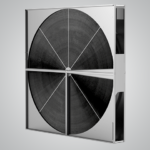
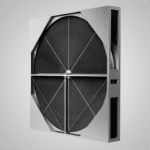
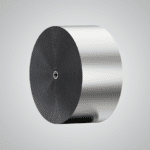
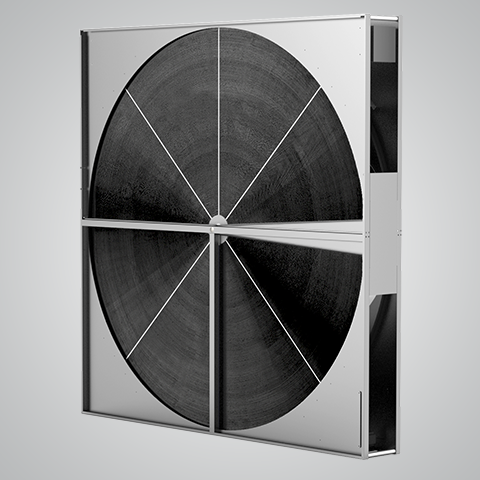
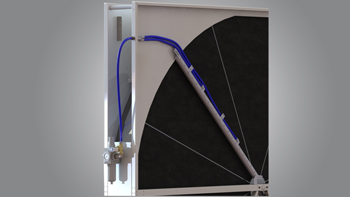
rotary heat exchanger
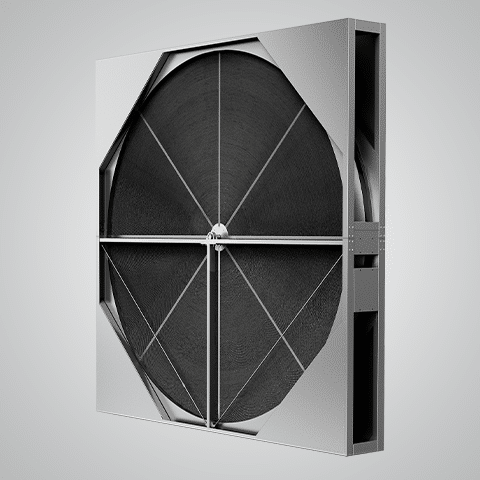
large rotary heat exchanger
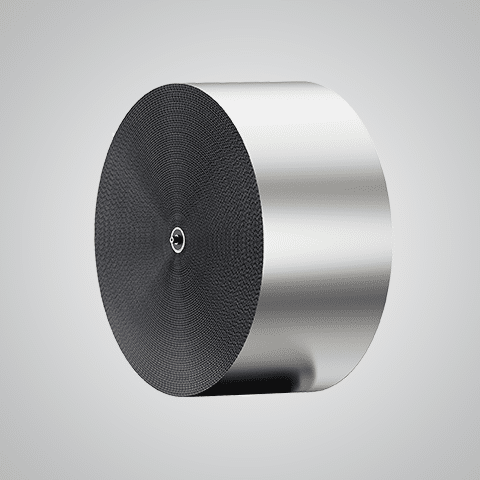
small rotor heat exchanger
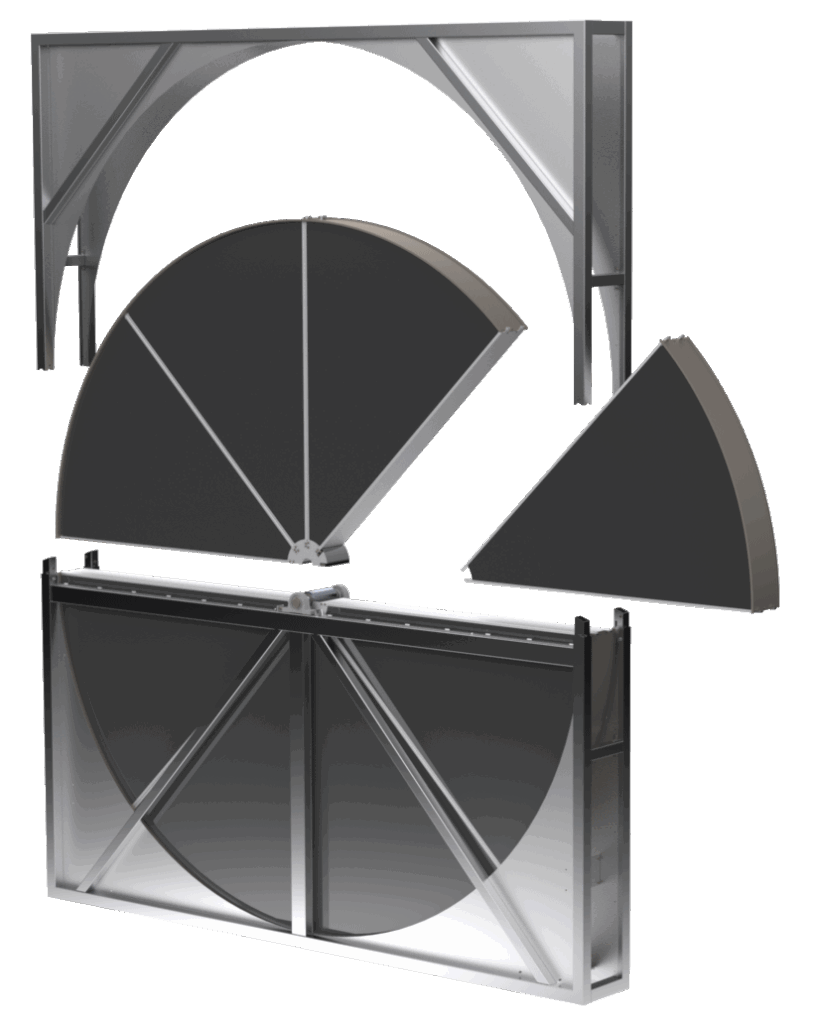
rotary heat exchanger
large rotary heat exchanger
small rotor heat exchanger

Rotary Heat Exchangers

Heatex rotary heat exchangers are carefully designed to meet the demands of each specific application and maximize energy recovery.

High Efficiency
High Efficiency

Rotating heat exchangers provide very high sensible and latent efficiencies.

Minimal Cross Contamination

Seals and purge sectors minimize the cross-contamination of exhaust air into the supply air.

Low Freezing Risk
Low Freezing Risk

Rotary heat exchangers offer very low freezing risk as the wheels by definition defrost themselves.

High Efficiency
High Efficiency

Rotating heat exchangers provide very high sensible and latent efficiencies.

Minimal Cross Contamination

Seals and purge sectors minimize the cross-contamination of exhaust air into the supply air.

Low Freezing Risk
Low Freezing Risk

Rotary heat exchangers offer very low freezing risk as the wheels by definition defrost themselves.

Rotary Heat Exchangers for Ventilation and Energy Efficiency

Rotary heat exchangers are highly efficient systems for heat recovery in ventilation and air conditioning systems. They are used to recover thermal energy from exhaust air and transfer it to the supply air.

The core component is a rotating heat wheel that continuously moves between the supply and exhaust air streams, transferring heat—and, depending on the design, also moisture.

Thanks to their high efficiency of up to 90%, rotary heat exchangers contribute significantly to energy savings and lower operating costs.

They improve the overall energy efficiency of ventilation systems while ensuring a comfortable indoor climate.

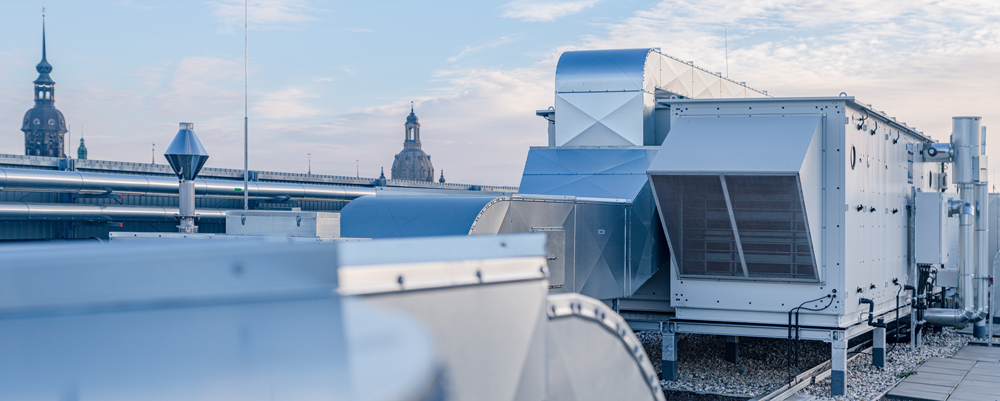
Typical applications include office buildings, industrial facilities, hospitals, shopping centers, data centers, and other environments with high air volume requirements.

With their compact design, long service life, and high performance, rotary heat exchangers are among the most cost‑effective solutions for modern, energy‑efficient, and sustainable ventilation systems.

ROTARY HEAT EXCHANGER FEATURES

Choose between one-piece rotary heat exchangers or segmented models. Both our wheels and casings are highly customizable, all featuring our high-efficiency heat transfer matrix.

  • Flexible wheel diameters – Available in 1 mm (0.039″) increments.
  • Numerous well heights – From 1.4 to 2.5 mm (0.55″ – 0.98″).
  • Custom casing dimensions – Almost any size above wheel diameter is available.

Additionally, we offer a wide range of options.

Rotary heat exchangers are also known as thermal wheels, energy recovery wheels, or heat recovery wheels, depending on the application area. Use the table below to find the rotary model that suits your application.

For marine-grade applications, we offer our Marine Edition rotor on request.

Advantages of Rotary Heat Exchangers
  • High heat recovery efficiency (70–90%) for maximum energy savings
  • Heat and moisture transfer in one compact system
  • Low frosting risk, often no additional frost protection needed
  • Low pressure drop, reducing fan energy consumption
  • Compact design for modern ventilation systems
  • Ideal for high air volumes in industrial and commercial applications
  • Proven, durable technology with long service life

CHOOSE YOUR ROTARY HEAT EXCHANGER MODEL

Every Model has a clear advantage, depending on your application needs. Both Model E and ES work perfectly in a double-rotor setup.

Heatex Model E & O ES & ER EN
Description Designed for medium airflows, Model E combines a smart, compact casing with a high-efficiency wheel (Model O). Designed for large airflows, Model ES combines a segmented casing and a high-efficiency wheel (Model ER). Designed for small airflows, Model EN features a smaller-diameter hub and bearing for maximized airflow.
Airflow capacity 200 – 90,000 Nm3/h (125 – 56,000 CFM) 2,000 – 190,000 Nm3/h (1,170 – 110,000 CFM) 50 – 2,000 Nm3/h  (30 – 1,177 CFM)
Rotor design One piece Segmented One piece
Configuration
  • With casing (Model E)
  • Without casing (Model O)
  • With casing (Model ES)
  • Without casing (Model ER)
Without casing
Exchanger orientation
  • Vertical
  • Horizontal
Vertical only
  • Vertical
  • Horizontal
Rotor diameter 500 – 2575 mm (19.69″- 101.38″)
+50 mm (1.97″) with casing
1600 – 3800 mm (47.24″ – 149.61″) + 100 mm (3.94″) with casing 200 – 500 mm (7.87″ -19.7″)
Special features
  • Slide-in solution, no attachments needed in AHU (large casings only).
  • Wheel-tilt function to minimize leakage and wear (large casings only).
  • Diagonal motor placement for easy access (large casings only).
  • Covered casing (optional)
  • Slide-in solution, no attachments needed in AHU.
  • 3 delivery options for narrow spaces.
  • Insulated casing (optional)
  • Smaller dimension hub and bearing for maximized airflow
  • Glued aluminum wrapping for high output and durability


OPTIONS FOR ROTARY HEAT EXCHANGERS

We offer a wide range of options to suit various applications.

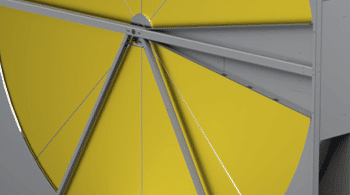
gray and gold colored rotor heat exchanger
Epoxy Coated Matrix & Corrosion-Protected Framework

Increase corrosion resistance with a corrosion-protected framework, epoxy-coated wheel, and corrosion-resistant ball bearings.

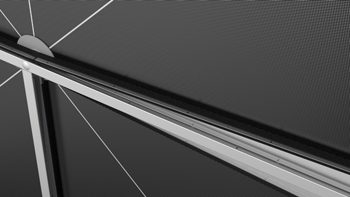
rottary heatexchanger sealing
Purge Sector & Sealings

Depending on the model, the casing can be equipped with special seals and a purge sector to minimize the cross-contamination of exhaust air into the supply air.

rotor matrix
Matrix Material

Choose an aluminum material for heat transfer and epoxy coating for enhanced corrosion protection. Choose a hybrid material (aluminum + molecular sieve) for higher moisture recovery and a molecular sieve for humidity transfer and dehumidification.

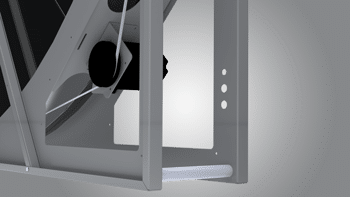
lower part of rotary heat exchanger
Hatches & Cable Glands

Inspection hatches and cable glands allow for easy access to the motor, belt, and pully for quick inspection and maintenance.

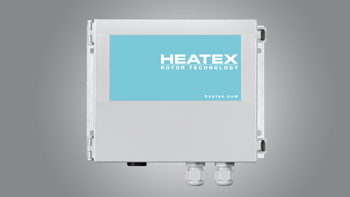
electronic plastic enclosure
Modbus, Rotation Detector & Power Belt

Depending on the model, we offer constant or step drives with Modbus and a built-in rotation detector. We also provide a sturdy drive belt called Power Belt.

Heatex Clean Blade

The clean blade uses pressurized air to push the contaminants out of the rotor into the leaving air. One revolution of the rotor is enough to clean the entire matrix.

APPLICATIONS FOR ROTARY HEAT EXCHANGERS

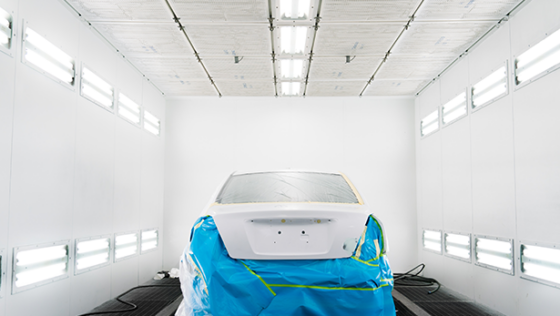
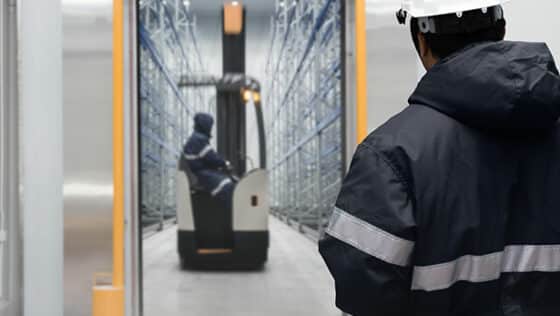
Rotary heat exchangers are very versatile and can be found in a wide range of applications. These are just a few examples.

PRODUCT SELECTION WITH HEATEX SELECT

Heatex Select enables accurate calculations of the performance of our products under different conditions. Choose your preferred heat exchanger Model and configure it exactly according to your needs.

Calculate with Heatex Select

FAQ & DOCUMENTS ABOUT ROTARY HEAT EXCHANGERS

How does a rotary heat exchanger work?

The wheel consists of a matrix of two foils: one flat and one corrugated; together, they form channels through which air can flow. The wheel is driven by an electric motor via a belt.

During one half of the rotation, interior exhaust air flows through the matrix. Its heat is stored in the matrix and, during the other half of the rotation, released to the fresh supply air from outside.

The size of the channel is called the well height. Different well heights and wheel diameters result in different efficiencies, pressure drops, and airflow rates.

Rotary heat exchangers that are properly designed, installed, and maintained transfer virtually no particle‑bound contaminants.

Can a rotary heat exchanger also transfer moisture?

Yes, a rotary heat exchanger with moisture transfer—also known as a sorptive rotary heat exchanger or enthalpy heat exchanger—enables simultaneous heat and moisture recovery from exhaust air. This not only saves energy but also helps ensure a stable and comfortable indoor climate.

Are there any disadvantages to rotary heat exchangers?

Yes, rotary heat exchangers also have disadvantages to consider when selecting a solution.

Due to the rotating design, a small amount of substance or odor carryover from exhaust air to supply air may occur. In modern systems, however, this risk is significantly reduced by a purge sector.

In addition, rotary heat exchangers include moving parts, such as a motor and bearings, which require some maintenance.

Another aspect is the rotor drive’s low power consumption, as well as its limited suitability for highly hygienic or heavily contaminated applications.

Despite these factors, the advantages—such as high efficiency, compact design, and optional moisture transfer—outweigh the disadvantages in most comfort and industrial applications, making rotary heat exchangers one of the most efficient heat recovery solutions available.

What is the efficiency of a rotary heat exchanger?

The efficiency of a rotary heat exchanger typically ranges from 70 to 90 percent, depending on design and operating conditions.

Modern high‑performance rotary heat exchangers often achieve a temperature efficiency of over 80 percent, while sorptive rotary heat exchangers also transfer moisture and provide a particularly high enthalpy efficiency.

The actual efficiency depends on factors such as rotor speed, airflow, temperature difference, and the overall design of the ventilation system.

Thanks to their high efficiency, rotary heat exchangers are among the most effective solutions for energy‑efficient heat recovery in both comfort and industrial applications.

Which applications are rotary heat exchangers suitable for?

Rotary heat exchangers are particularly well-suited for applications requiring high energy efficiency, continuous operation, and a compact design.

Typical areas of application include office and administrative buildings, schools, hospitals, industrial and process ventilation, and shopping centers and sports facilities.

Thanks to their high heat-recovery efficiency, rotary heat exchangers are ideal for comfort ventilation systems with high airflow rates.

Sorptive rotary heat exchangers are additionally used where controlled moisture transfer is required, for example, to improve indoor climate comfort or to reduce humidification and cooling energy demand.

Overall, rotary heat exchangers are a proven solution for energy‑efficient ventilation systems in commercial and industrial applications.

Are there other names for rotary heat exchangers?

Rotary heat exchangers are often referred to by different names depending on their design, function, or industry context. Here’s a breakdown of the most common terms and how they relate to each other.

The Air-to-Air Rotary Heat Exchanger and the Air-to-Air Rotor
Both describe systems that transfer heat between two airflows—typically the exhaust and intake air in a ventilation system. These terms emphasize the technology’s application, which involves recovering heat from outgoing air and using it to precondition incoming air, thereby improving energy efficiency.

Rotary Heat Exchangers and Rotating Heat Exchangers
Are general terms that refer to any heat exchanger that uses a rotating wheel to transfer heat. These devices can handle sensible heat (temperature) and, in some cases, latent heat (moisture), depending on the wheel’s material and design. These terms are often used interchangeably in technical and commercial contexts.

Thermal Wheel
Is another name for a rotary heat exchanger, typically used when referring to systems that transfer only sensible heat. This term is commonly used in building ventilation and data center cooling, where moisture transfer is not typically required.

Enthalpy Wheel
Refers to a specific type of rotary heat exchanger that transfers both sensible and latent heat. These wheels are coated with hygroscopic materials that absorb and release moisture, making them ideal for applications where humidity control is essential, such as in humid climates or in tightly sealed buildings.

Adsorption Rotor
Is a more specialized term used for systems that focus on moisture removal through adsorption. These rotors are typically used in industrial drying, pharmaceutical environments, and clean rooms. They utilize materials such as silica gel or molecular sieves to capture moisture from the air, providing high-efficiency dehumidification.

While these terms may seem different, they all refer to variations of the same core technology: a rotating component that facilitates heat and, in some cases, moisture transfer between air streams. The differences lie in the specific functions, materials, and applications of the exchanger.

DOCUMENTS
Technical Documentation
  • Rotary Heat Exchangers - Technical Information (Incl. ES & ER)

    EN, DE, FR
  • Rotary Heat Exchangers - Technical Information (Incl. EQ & EV)

    EN, DE, FR
  • Model E Installation & Maintenance

    EN, FR, DE
  • Model ES Installation & Maintenance

    EN, DE, FR
  • Model EQ Installation & Maintenance

    EN, FR
  • Model E Engineering Specifications

    EN
  • Heatex Clean Blade

    EN
  • IBC VariMax 25 NG Manual

    EN, DE, FR
  • IBC VariMax 50 NG Manual

    EN, DE, FR
  • IBC VariMax 100 NG Manual

    EN, DE
  • IBC VariMax 100 Manual

    EN, FR
  • OJ Motors and Controllers

    EN
Conformity
  • Performance - Eurovent - Regenerative Heat Exchangers

    EN
  • Hygiene - Rotary Heat Exchangers

    EN, DE
Marketing Material
  • Rotor Ventilation Guideline

    EN
  • Heatex Model E - Large Rotors

    EN
  • Molecular Sieve - The Preferred Choice

    EN
  • Double Rotor Concept

    EN
  • Model ES and ER - Segmented Rotors

    EN

CONTACT US

We are here to support you.

Contact us