Air-To-Air Heat Exchangers

Rotary & Plate Heat Exchangers

Heatex quality air-to-air heat exchangers are custom-made to meet the customer’s technical specifications. There are two categories of air-to-air heat exchangers: rotary and plate. Plate heat exchangers are further divided into cross-flow and counter-flow types based on their different airflow configurations. Depending on the application, rotary and plate heat exchangers have their distinct advantages. Go to Heatex Product Catalog

Benefits of Rotary Heat Exchangers

Benefits of Plate Heat Exchangers

Low risk of freezing Very low leakage rate
Humidity transfer No moving parts
Leaving a small footprint in air direction Minimal service and long lifetime
High flow rate capacities Rapid and easy cleaning
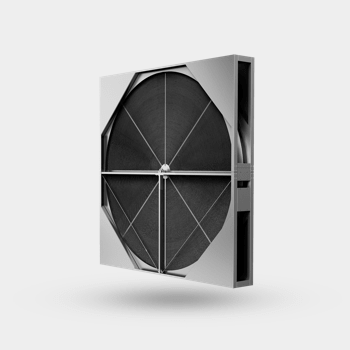
Rotary Heat Exchangers
View products
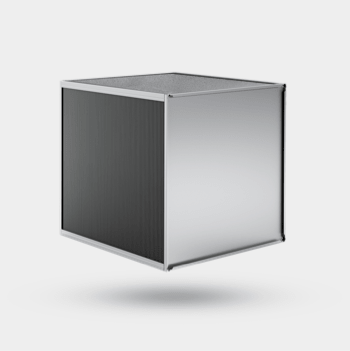
Crossflow Heat Exchangers
View products
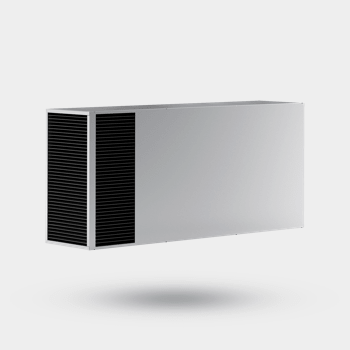
Counter Flow Heat Exchangers
View products
Rotary Heat Exchangers
  • Provide both high sensible and latent efficiencies of up to 90%.
  • Offer a very low freezing risk as to the wheels by definition defrost themselves.
  • Allows for latent transfer or increased corrosion protection when coated.
View products
Crossflow Heat Exchangers
  • Up to 90% efficiency with very low cross-contamination.
  • Minimal service and a long lifetime thanks to strong aluminum plates and the absence of moving parts.
  • Rapid and easy cleaning.
View products
Counterflow Heat Exchangers
  • Cooling capacities up to 630 W/K.
  • Minimal service and a long lifetime thanks to strong aluminum plates and the absence of moving parts.
  • Compact and flexible design to ease implementation in various applications.
View products
Certified Performance

Our products always comply with standards and perform to, or even exceed, codes and specifications. Heatex holds several certifications covering product and operation quality worldwide, e.g., EuroventAHRI, and TüvSüd. Our air-to-air heat exchangers are field-tested and designed to comply with all relevant building codes and regulations. We frequently send our products to independent labs worldwide for testing, and we also have our own in-house test rig to evaluate product performance regularly.

Go to Documents
Corrosion Resistance

Experience has shown that significant corrosion is likely to occur when relative humidity is above 80% and temperature is above 0°C. However, corrosion occurs at much lower humidity levels if pollutants and/or hygroscopic salts are present. Corrosivity classes, combined with typical applications, can inform material selection.

Heatex offers a broad range of products and materials tailored to each end-user’s specific needs. The heat transfer plates are made of aluminum as standard, a well-tested and suitable material for industrial heat exchangers.

However, we also offer epoxy-coated heat-transfer plates and wheels for harsher environments, such as coastal installations with high salinity or industrial applications with elevated pollution levels. For even greater corrosion resistance, we recommend multilayer epoxy or stainless steel.

Atmosphere Corrosivity Application Areas*
No/ low pollution Low – C1 to C2 Comfort ventilation
Moderate pollution and/or low salinity Medium – C3 Outdoors, coastal
Moderate salinity High – C4  Industrial, coastal
High salinity & humidity Very high – C5 Industrial, coastal

*For informative purposes only. Only the actual mass-loss measurements will yield the correct classification.

Ask an Expert

If you are unsure of the type or configuration of heat exchanger you need, please contact us. We are here to help you with your air heat exchanger design.

Contact Us
engineers working
Benefits of Air-to-Air Heat Exchangers

In today’s rapidly changing climate, finding energy-efficient solutions for heating and cooling is more important than ever.

To minimize energy consumption in thermal air treatment, an energy recovery system (ERS), also known as a heat recovery system (HRS), should be used.

An air-to-air heat exchanger, also known as an air exchanger or a heat recovery ventilator (HRV), is a device that enables heat transfer between two separate air streams.

By preconditioning incoming air, air-to-air heat exchangers reduce heating and cooling loads on HVAC systems.

Both plate and rotary air-to-air heat exchangers can recover up to 90% of the heat that would otherwise be lost through ventilation, offering a cost-effective and energy-efficient solution for heating, cooling, and ventilation.

Plate heat exchangers also enable reliable, energy-efficient cooling of enclosures in heat-emitting processes, such as sensitive electronics, electrical motors, and generators. Thanks to fully separated channels, the airflows never mix, creating a closed-loop system.

Air-to-air heat exchangers are highly versatile and easy to maintain. The strong aluminum and steel construction makes this type of heat exchanger very tough and suitable for a wide range of applications.

Air-to-air heat exchangers offer a wide range of benefits, making them a popular choice. Some of these benefits are:

  • Energy efficiency

These devices reduce the energy required to heat or cool incoming air by recovering and reusing heat from outgoing air, resulting in substantial energy savings and lower utility bills.

  • Improved indoor air quality

These devices help remove pollutants, allergens, and odors from the living spaces by exchanging stale indoor air with fresh outdoor air.

  • Cost savings

By reducing the energy required for heating and cooling, air-to-air heat exchangers significantly reduce long-term costs. While the initial investment may be higher than that of traditional ventilation systems, the energy savings over time offset this cost.

  • Environmental sustainability

By minimizing energy consumption and promoting energy-efficient practices, these devices help to conserve natural resources and mitigate environmental impact.

CONTACT US

We are here to support you.

Contact us